Dreams About Being Pregnant — What They Might Mean
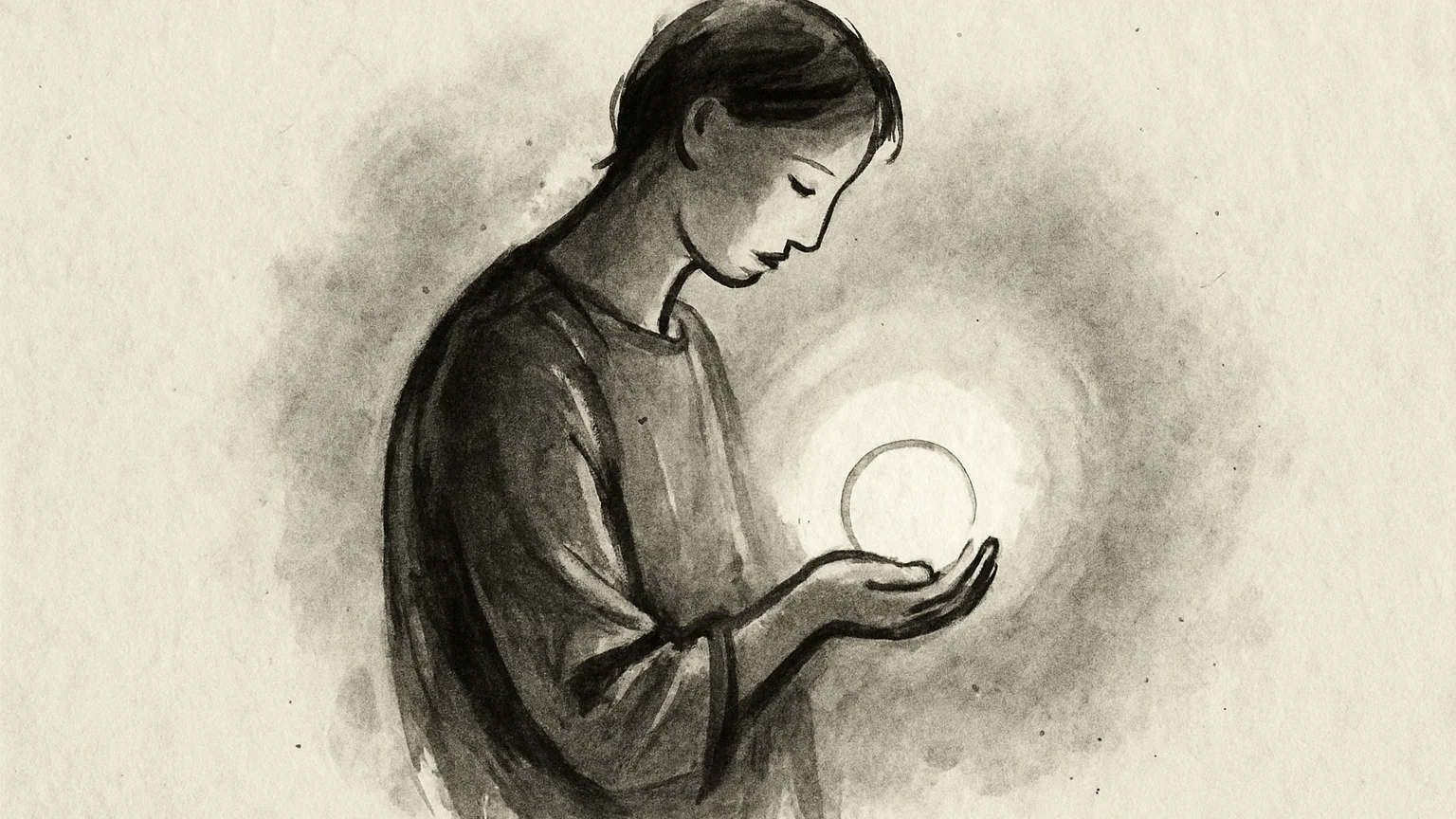
Dreams about being pregnant belong to everyone — the pregnant, the not-remotely, the trying, the done, and a steady stream of surprised men. The dream tends to carry gestation in its widest sense: something developing that isn’t ready to be seen yet. And for the actually pregnant, it plays by different rules entirely, worth knowing before any interpreting begins.
What this dream might be about
Start with the dream’s most useful clue: who gets it. If pregnancy dreams belonged to pregnancy, their audience would be narrow and their timing obvious. Instead they land on teenagers and retirees, on men, on the child-free by choice, on people for whom pregnancy is biologically closed — which tells you the dream was never really about the condition. It’s about the state: carrying something that is forming but not finished, real but not yet visible, yours but not yet announced. The body’s image for that is unmatched in the dream’s vocabulary, and the mind borrows it freely.
So the first question this dream asks is simply: what are you growing? The dictionaries say pregnancy means something new developing, and — as with death meaning endings — the cliché holds because the metaphor is load-bearing in the language itself: projects are conceived, ideas gestate, plans come to term. Pregnancy dreams cluster densely around exactly those seasons — the business quietly planned during the day job, the manuscript nobody’s seen, the decision to leave that’s been forming for months, the new self assembling in private (the sobriety, the faith, the coming-out, the career turn). What marks these seasons is the unannounced part: something significant is underway, and the world doesn’t know yet. The dream renders that condition precisely — including its vulnerability. Dreamers in this version often spend the dream protective of the belly, aware it can’t defend itself. Whatever you’re growing can’t either, yet. The dream knows why you haven’t told people.
Timing inside the dream matters too, and dreamers tend to remember it: how far along were you? Early and barely showing is one dream — the secret still fully private, the thing still fragile, still cancellable. Heavily, unmistakably pregnant is another: the development now visible to everyone, the announcement overdue, the arrival near — and the dream often carries that stage’s specific pressure, the sense that what’s been growing must soon be shown, named, delivered into the world’s hands. If you woke remembering the fullness more than anything, the question may be less what am I growing than what is finished growing — and what am I waiting for?
Two audiences need their own paragraphs, because for them this dream isn’t symbolic weather. For the actually pregnant: your dreaming has changed, physically. Pregnancy deepens dream production while breaking sleep into lighter pieces, so pregnant dreamers wake mid-dream constantly and remember far more — more vivid, more strange, and reliably more anxious, including dreams about the baby that can be genuinely distressing. These are a documented feature of pregnant sleep, near-universal in some form, and predictive of nothing; the practical note below is yours. And for those trying, or those who have lost: a pregnancy dream can land like tenderness or like cruelty, sometimes both in the same minute. If you’re trying, the dream is most often desire itself, rehearsing — the mind running the wanted future, which is what minds do with wanting. If you’ve lost, the dream may be grief keeping its own calendar, and it deserves the same gentleness as any dream of the missed. Neither is a sign, a promise, or a verdict. Both are the night, being honest about what the heart is carrying.
None of these readings is the meaning. They’re the places this dream tends to visit. Which one it visited in you is something only your night, and the life around it, can say.
Discovering it — the test, the telling
Sometimes the dream’s whole drama is the finding out: the test in the dream bathroom, the doctor’s sentence, the sudden certain knowledge arriving mid-scene — and your reaction, which dreamers remember with unusual clarity. Joy, dread, disbelief, instant calculation: the dream is frequently running exactly that instrument. In the symbolic register, this version marks the moment of realizing something has been developing — the day you notice the side project has become a plan, the feeling has become serious, the change has already begun without a decision ever being announced to yourself. What you felt at the dream’s positive test is worth trusting as data. It’s often your first uncensored reading of the real thing that’s growing.
Pregnant while actually pregnant
The most literal version and the least in need of a dictionary. Pregnant dreamers dream their pregnancy constantly — the bump, the birth, the baby, in every register from luminous to alarming — and the volume is the physiology above, not a message stream. A few of its famous residents, all normal and all near-universal: dreams of giving birth to something strange (an animal, a full-grown child, an object — the mind has no image of this baby yet, so it improvises); dreams of misplacing or forgetting the baby (the responsibility rehearsal, identical to every parent’s version after birth); and vivid anxiety dreams about something wrong, which are the caretaking alarm running drills and correlate with nothing. Interpreting these is optional. Knowing they’re standard-issue is the actual comfort.
Giving birth
The arrival dream — labor, delivery, the thing at last outside you, in the room, in your arms — and in the symbolic register it tends to track completion: the long-developed thing finally shown, shipped, said, launched. Dreamers report the full emotional range of real deliveries — triumph, terror, anticlimax, awe — and the register usually matches the waking arrival it shadows: the book out, the business opened, the truth finally told. Worth noticing what was born and whether you recognized it; the dream sometimes delivers something unexpected, and the surprise is the message — the thing you’ve been growing may not be quite the thing you thought you were growing. That’s not a warning. Developments develop. It’s what they’re for.
Something wrong
The fear version — a stillness, a bad scan, a wrongness the dream won’t specify — and it needs splitting cleanly in two. In actual pregnancy: these dreams are common, documented, and unrelated to outcomes — the alarm system rehearsing, at pregnancy’s amplified dream-volume, and nothing more; if one shook you, that’s what it was. In the symbolic register, the wrongness usually tracks doubt about the development — the project you’ve stopped believing in mid-build, the plan with a flaw you’ve sensed and not examined, the change that may have quietly stopped growing. That version repays attention, gently: something you’re carrying may need checking on — not because the dream diagnosed it, but because you apparently already suspect.
Someone else pregnant
A friend, a sister, a stranger visibly carrying — and the reading usually runs through the relationship, not the womb. Someone else’s dream-pregnancy tends to mark their development as felt by you: the friend becoming someone new, the sibling’s life turning a corner, change growing in a person you love — sometimes welcome, sometimes carrying the quiet ache of being left in place while they grow. In milestone seasons this dream shades into the everyone-else register — the years when the announcements cluster and each one lands slightly on you. And per the FAQ, retire the folk claim: the dream announces no one’s news. If it turns out to coincide, that’s the odds, not the antenna.
Pregnant with something impossible
The dream’s surrealist wing: pregnant with twins beyond counting, with something not a baby at all, pregnant in the wrong body, pregnant again the moment after birth. These read best through their specific impossibility. Too-many tends to track over-development — more begun than can be carried, every project somehow second-trimester at once. The not-a-baby versions usually flag that what’s growing isn’t what it’s labeled as — a job that’s actually an exit plan, a friendship that’s actually something else. And the endlessly-pregnant dream, never delivering, belongs to the perpetual developers: the ones with something always forming and nothing ever shown. That version’s question is the tenderest on the page, and it only has one: what would it take to let something be finished?
What matters more than the symbol
Here is the honest limit of a page like this one: the same pregnancy weighs differently in different lives. Dreaming a belly the month your startup is still a secret is not dreaming one in your second trimester, and neither is the dream that arrives on what would have been a due date. A dictionary can tell you what a word tends to mean. It cannot tell you what the sentence meant — and the dream you had was a sentence, spoken once, in your voice, in the middle of your particular life.
No one can tell you what your dream means — including us. What the pregnancy was doing in your night depends on what surrounded it: what is actually developing in your life and how far along it truly is, who knew in the dream and who didn’t, what you felt at the discovery — and what, if anything, was finally born. Those details are where the meaning lives, and they belong to you.
Before you go looking for meaning
One practical note. If you are pregnant, the strangeness of your dreams has a body-level explanation before any symbolic one: pregnancy remakes sleep. Dream production runs deeper on shifted hormones while sleep itself turns lighter and more broken — and waking mid-dream is precisely what makes dreams remembered, so pregnant dreamers recall more, more vividly, than at any other point in life. Add a mind with genuinely new material to process and you get pregnant dreaming’s famous intensity, anxious chapters included. None of it forecasts anything about the pregnancy. And if the dreams arrive while you’re trying to conceive, or after a loss, they keep the heart’s calendar, not the body’s — which makes them no less worth honoring, and no more a sign. Sometimes the pregnancy dream is just the pregnancy, dreaming. And sometimes it’s the wanting. Both are allowed.
Frequently asked questions
Why did I dream I was pregnant when I'm not?
Because this dream was never only for the pregnant — it's one of the most widely dreamed symbols there is, across every age, life stage, and sex. The pattern most often reported ties it to gestation in the broad sense: something developing in your life that isn't ready to be shown yet — a project, a plan, a change, a self. If something in you is quietly growing and unannounced, the dream has a costume for exactly that.
Does dreaming about pregnancy mean someone I know is pregnant?
No — this is one of folklore's favorite dream claims, and like the rest of them, it doesn't hold. Dreams don't announce anyone's news. The belief survives on coincidence and volume: pregnancy dreams are extremely common, and so, among people of a certain age, are pregnancies. When the two collide, the story writes itself. Your dream is about your night, not anyone's test results.
I'm pregnant and my dreams have become vivid and disturbing — is that normal?
Completely, and it's worth saying clearly: pregnancy changes dreaming itself. Hormonal shifts deepen dream production while lighter, more broken sleep means waking mid-dream far more often — so dreams are more numerous, more vivid, and better remembered. Anxious ones are part of the package for most pregnant dreamers, including strange or alarming ones about the baby. They are a known feature of pregnant sleep, not omens, and they say nothing about the pregnancy.
I'm a man — why did I dream I was pregnant?
Because the dream isn't about anatomy; it's about carrying. Men dream of being pregnant regularly, and the reading is the same and often clearer for having no literal decoy: something is developing in you or your life — a work, a change, a responsibility taking form — and the dream reached for the body's strongest image of unfinished making. Expectant fathers get it too, in waves, for the most legible reason of all.