Dreams About Houses and New Rooms — What They Might Mean
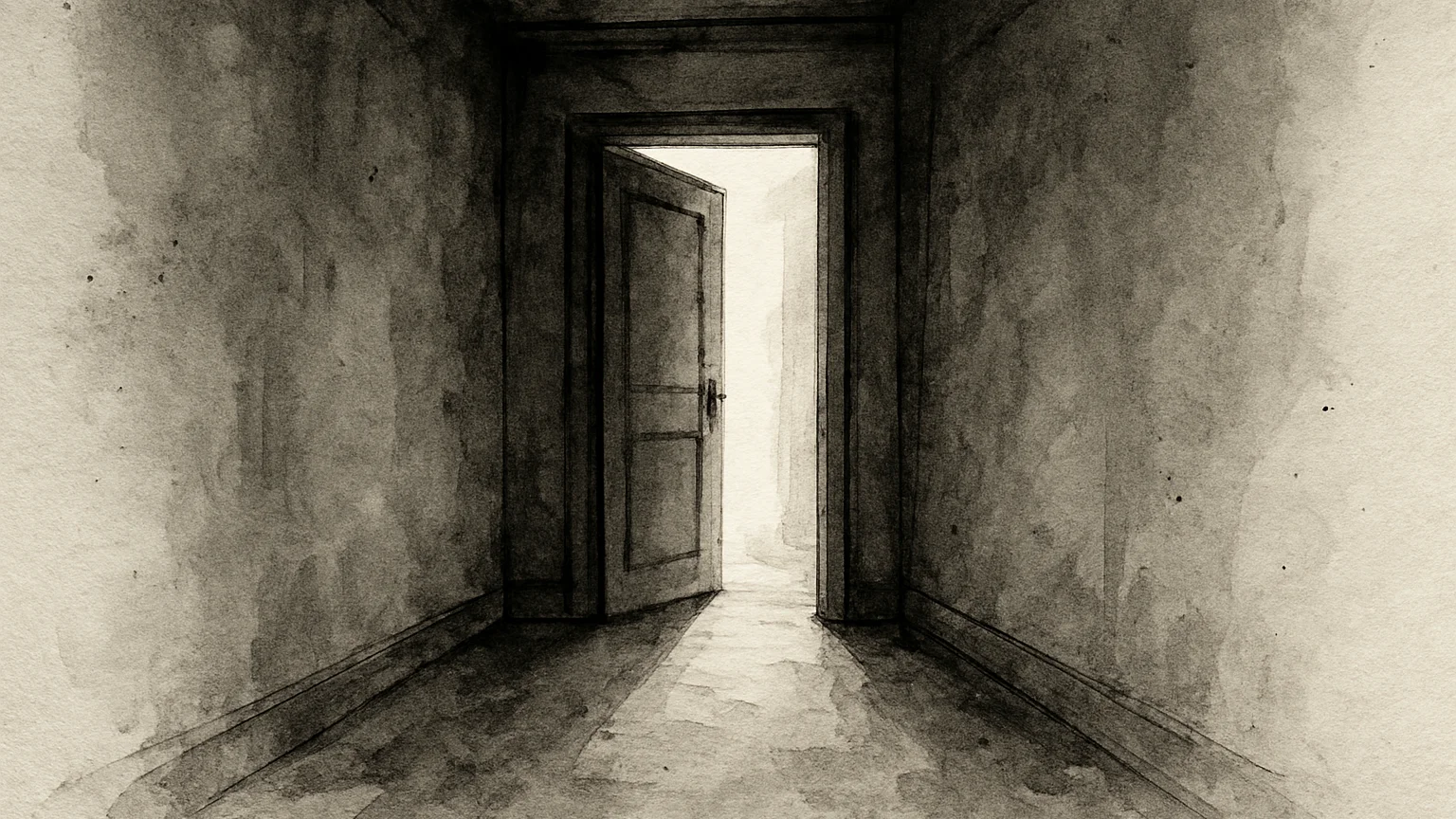
Dreams about houses are dreams about the self with walls. It’s the oldest and most reliable equation in dreaming — the house as the life, its rooms as your capacities and compartments — and it’s why one of the most joyful dreams anyone reports is also one of the simplest: a door opening in a familiar house, onto rooms you never knew were there.
What this dream might be about
Start with why the equation holds, because for once the dictionaries and the dreamers agree completely. A house is the one structure a person inhabits the way they inhabit themselves — private interior, public face, rooms for different functions, storage for the past, thresholds that decide who gets in. Its geometry maps onto a life without a single forced fit: upstairs and down, front rooms and back, the presentable parlor and the locked room, the attic where things are kept and the basement where things are put. Dreamers feel this without being taught it — house dreams arrive pre-understood in a way animal or disaster dreams don’t, and people wake from them already half-knowing which part of the building was which part of them. So the house dream’s questions are architectural: what state is the structure in, who’s inside it, which doors open — and, in the version this page is named for, how much more of it there turns out to be.
Because the crown jewel of house dreaming — the one people describe decades later, in the tone reserved for the flying dream — is the new rooms. The house is one you know utterly: your home, your childhood home, the recurring dream-house. And then a door — often one you’ve somehow never tried, sometimes one that was never there, sometimes just the back of a closet — opens onto a room you didn’t know. Then another. A corridor. A staircase. Whole wings, sometimes furnished, sometimes flooded with light, sometimes an entire second house folded impossibly inside the first — and running through all of it, the dream’s signature emotion: not fear but awe, discovery edged with a strange conviction that these rooms were always here, that you somehow always knew. The reading writes itself and dreamers usually wake already holding it: the self has more space than you’d been living in. Capacities unexplored, possibilities unopened, square footage of a person that the daily floor plan never uses. These dreams cluster tellingly — in reinvention seasons, in recoveries, after long constriction ends: the grief loosening, the kids launched, the retirement begun, the therapy working — whenever a life that had narrowed begins to reopen and the mind, taking measurements, discovers the building was never as small as the living had become. If this dream found you, take the awe seriously. Something in you has been counting rooms, and the count came back higher than the one you’ve been using.
The childhood home deserves its own paragraph, because it is — by a wide margin — the most dreamed building in any life, hosting dreams into people’s eighties, long after the house itself is sold or gone. Two reasons, and they braid. The mundane one: spatial memory laid down young is the deepest ever formed — you could walk that hallway blind today — so the dreaming mind, which reuses its best-built sets, stages everything there, including dreams that have nothing to do with childhood at all. And the meaningful one: when the house itself is the subject — returning to it, finding it changed, finding strangers living there, finding it exactly as it was — it tends to stand for the original things: the family as it first was, the self before its renovations, the past as a place you can visit but not move back into. Finding the childhood home altered in a dream — rooms rearranged, additions you don’t recognize, your bedroom now something else — is usually the mind’s honest survey of what time has done to the original structure: the family changed, the past re-understood, the house of origin renovated by everything that’s happened since. And finding it unchanged, perfectly preserved, every object in place — that one tends to visit when something in the present is asking what home was, or where it went.
And the house reports its condition, which is the reading to check when the dream turns anxious: the state of the structure tends to track the state of the life. Cracks in the walls, the leak spreading on the ceiling, the rot found under the floor, the wiring sparking behind things — dream-houses in disrepair cluster in seasons of deferred maintenance, and the dream is usually specific about which system is failing: foundations (the load-bearing things — health, marriage, money), roofs and ceilings (the protection overhead), plumbing and water damage (the emotional systems, seeping), wiring (the nerves, overloaded). It isn’t condemnation; it’s a surveyor’s report — and like real surveys, its purpose is the fixing. Dreamers who address the waking counterpart routinely report the dream-house repairing itself across subsequent visits, which is the recurring house doing what it does best: keeping the file open, and updating it.
None of these readings is the meaning. They’re the places this dream tends to visit. Which one it visited in you is something only your night, and the life around it, can say.
Discovering new rooms
The full version of the dream described above, with its details attended: where the rooms were matters — behind the closet suggests capacity hidden behind the mundane; upstairs, aspiration’s direction; below, depth’s — and so does their condition. Furnished rooms, especially with old or beautiful things, tend to read as inherited capacity: abilities that were always in the family of you, stored. Empty rooms flooded with light read as pure possibility, unassigned. Ruined rooms behind the new door — rarer, and important — suggest capacity that was closed off for a reason, and the dream reopening it may mark readiness to renovate something long sealed. One more detail dreamers ask about: the conviction of always having known. Trust it. The dream isn’t building those rooms in the moment — it’s disclosing them, and the feeling of recognition is the disclosure’s signature. You did know, somewhere. The dream is the somewhere, finally getting the door open.
The childhood home
Held above at length; what belongs here is the triage. If the old house was merely the set — the dream’s events unrelated, the house just hosting — read the events and let the venue be a venue. If the house was the subject, the dream’s edits are the content: strangers living there (the past occupied by other people’s versions of it, or simply — sold, moved on, no longer yours to enter); your room now something else (the place you held in that structure, reassigned); the house bigger, smaller, wrong (the past resized by everything learned since). And the recurring pilgrimage version — returning again and again, wandering it, touching things — tends to keep company with the years when origin is being reprocessed: parents aging or gone, your own children reaching the age you were in those rooms, the family home literally sold. Those dreams need little decoding. They’re visitation rights, exercised — the one form of going back that’s always granted.
The house in disrepair
The surveyor’s dream, given its own door for the readers who came for it: the crack that wasn’t there last visit, the ceiling stain spreading, the floor soft in one corner — and the dream’s insistence that you look at it, often literally guiding you room to room. The reading above holds — deferred maintenance, system by system — with one addition about the dream’s tone, which dreamers often misread: it isn’t accusatory. Houses age; lives incur wear; the dream is not saying you failed the building. It’s saying the building is worth surveying — and its specificity is a kindness, because “the ceiling, in the back bedroom, spreading” is a far more workable finding than the waking version, which usually just presents as dread. If a disrepair dream recurs, track the damage across visits like the surveyor you’re being asked to be. Worsening is a message. So — and dreamers under-report this — is the visit where you find it, at last, repaired.
An intruder in the house
The house dream’s nightmare wing: the sound downstairs, the door that was locked standing open, the figure in the hallway of the self — and the bone-deep wrongness of someone in your space uninvited. If the house is the self, the intruder is what’s gotten in without admission: the person who’s overstepped into your life and stayed, the obligation that moved in, the fear that’s taken a room — and the dream’s geography maps the intrusion: heard at the perimeter is different from standing in the kitchen, which is different from upstairs, in the private floors. What you did — hid, confronted, called for help that wouldn’t connect — tends to mirror the waking stance toward the boundary in question. Two honest notes: real night sounds author this dream constantly (the practical section takes it up), and the chase’s old wisdom applies here at home — the recurring intruder, like the recurring pursuer, is usually asking to be looked at, not fled. The dream keeps staging the break-in because something is inside the boundary. Turning on the lights is allowed.
The composite house
Half your childhood home, but the kitchen is from your first apartment, and the garden belongs to a grandmother’s house, and somehow it’s all one address the dream treats as obvious. The blended house is dreaming’s ordinary miracle — the mind merges its encoded homes freely — and when the merge itself feels meaningful, it usually is: the composite tends to appear when life’s chapters are being integrated, the dream literally building one structure from the eras — who you were in that kitchen, who you became in that garden — as some waking process does the same. Which rooms made the cut is the composition’s content: the dream chose these eras, these selves, to assemble tonight’s house from. Dreamers mid-reckoning — memoir seasons, milestone birthdays, therapy’s deeper stretches — get the composite house on repeat, each visit a new draft of the same question: out of everywhere you’ve lived, what does home — the final, load-bearing version — actually consist of?
The shrinking house
The new-rooms dream has an inverse, and it deserves naming because its dreamers rarely find it discussed: the house contracting — rooms missing that used to be there, doors opening onto walls, the corridor shorter than it was, the whole structure somehow reduced — and the dream’s quiet claustrophobic grief. Where new rooms mark a life reopening, the shrinking house marks one narrowing: options closing, the world contracting to commute and obligation, a self that once had wings now living in two rooms of itself. It visits constricted seasons — the caregiving years, the survival-mode stretches, long recoveries — and it should be read the way the new-rooms dream is read, as a measurement, not a sentence. The rooms aren’t demolished; in the dream’s own logic they’re unfound, which is different. More than one dreamer has reported the sequence across a hard year’s nights: the shrinking house, then months later, in a better season — the same house, and a door they’d never tried. The building keeps the rooms. It’s waiting for the living to widen back into them.
What matters more than the symbol
Here is the honest limit of a page like this one: the same house stands differently in different lives. New rooms discovered the spring after a divorce is not new rooms in the month a first book gets written, and neither is the childhood home dreamed the week it finally sells. A dictionary can tell you what a word tends to mean. It cannot tell you what the sentence meant — and the dream you had was a sentence, spoken once, in your voice, in the middle of your particular life.
No one can tell you what your dream means — including us. What the house was doing in your night depends on what surrounded it: what in your life is currently opening, closing, intruding, or asking for repair; which house it was and what the dream changed about it; which door you tried — and what you felt when it opened. Those details are where the meaning lives, and they belong to you.
Before you go looking for meaning
One practical note. House dreams have the most literal season there is: moving. House-hunting, selling, renovating, or even idly scrolling listings reliably floods the nights with architecture — the mind rehearsing spaces is what it does with spaces under decision — and the weeks around an actual move produce house dreams at the highest rate of any life event. The intruder dream, meanwhile, has the most literal author: real sound. The boiler’s knock, the settling beam, the cat on the stairs, a partner’s key at midnight — night noises enter sleep directly and get narrated as footsteps with great reliability, which is why this dream spikes in new homes, where the building’s sounds aren’t yet filed as familiar. So before the symbol, the property check: are you moving, renovating, browsing — or newly moved in, learning a strange house’s voice at 3 a.m.? Sometimes the dream-house is just the real one, being memorized. The rooms it’s discovering are down the hall.
Frequently asked questions
What does discovering new rooms in a dream mean?
It's one of the best-loved dreams there is — a door in a familiar house opening onto rooms you never knew — and the reading most often reported matches the feeling it leaves: undiscovered capacity. The house in dreams tends to stand for the self or the life, so new rooms are space you didn't know you had — abilities, possibilities, whole wings of a person unexplored. These dreams cluster when life is reopening: after grief, after constriction, mid-reinvention.
Why do I keep dreaming about my childhood home?
Because it's the most deeply encoded building of your life. The spatial memory laid down in childhood is the strongest you'll ever form — you could still walk that hallway blind — so the dreaming mind uses it as a permanent stage set, hosting dreams that have nothing to do with childhood. When the house itself is the subject, it usually stands for the original self, the family, or the past; when it's just the venue, the dream may simply be using its best-built set.
What does an intruder in the house mean in a dream?
If the house is the self, an intruder is something in your space that you didn't admit — and the dream tends to fire when a boundary has been crossed in waking life: a person overstepping, a demand that moved in, a worry that got inside. Who it was, where you first heard them, and which room they reached usually maps the intrusion. It isn't a premonition about your actual house — though real night noises do write themselves into this dream constantly.
Why does the same house keep appearing in my dreams?
Many dreamers have one — a recurring house that exists nowhere, or a blend of several real addresses, revisited for years. The mind reuses its best sets, and a stable dream-house tends to become a stable symbol: your life's standing portrait, renovated by the dream as the life changes. Worth tracking across visits — which rooms open, which stay locked, what's newly in disrepair. The changes between visits are often the real message.