Dreams About Car Crashes — What They Might Mean
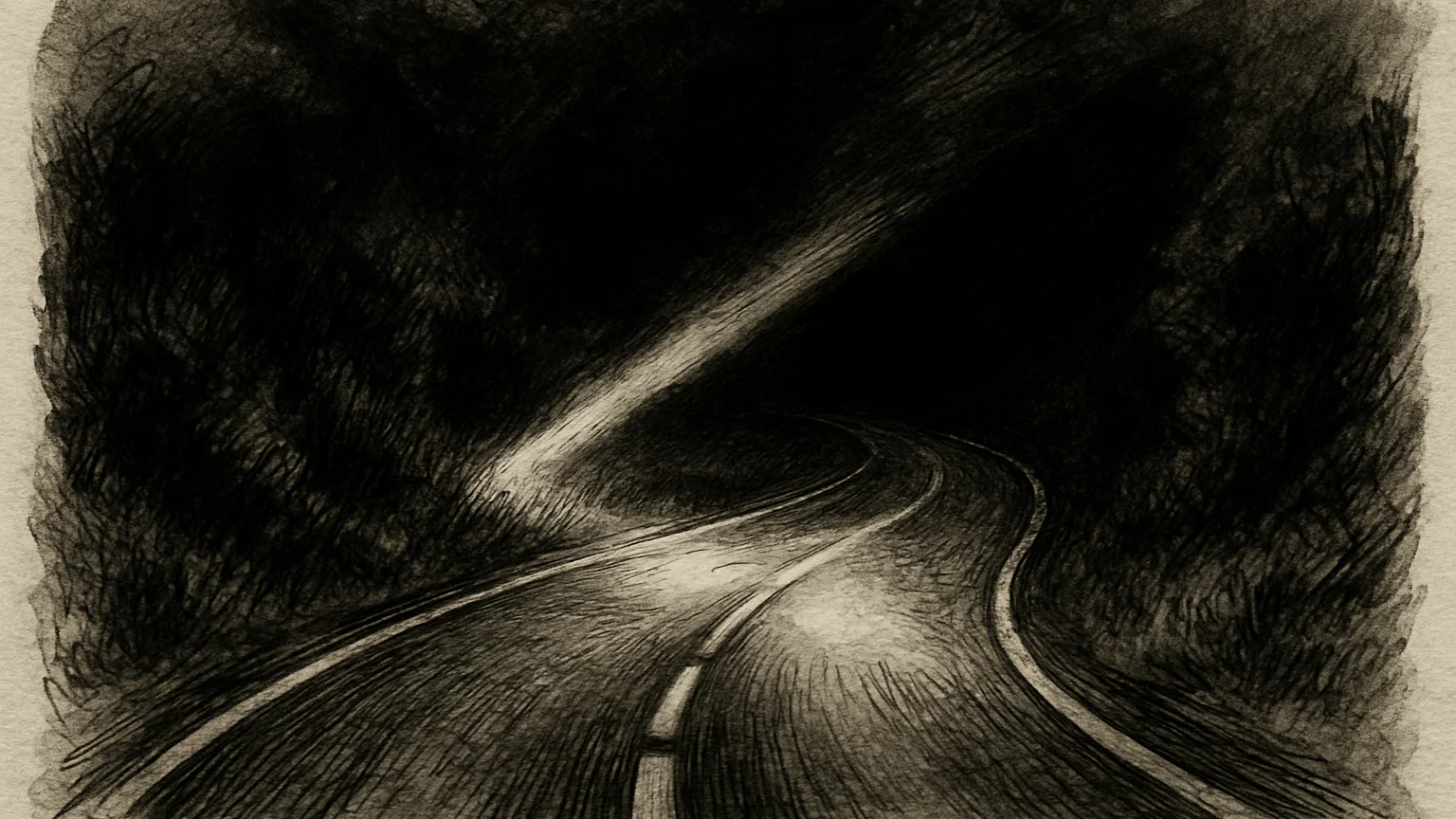
Dreams about car crashes are dreams about trajectory — a life’s direction, speed, and control, rendered as a machine on a road, and then interrupted. The details do the diagnosing: what failed, what was hit, how fast. But one question outranks every other in a car dream, and the dream knows you know it: who was driving?
What this dream might be about
The car earned its place in the dream vocabulary by being what almost nothing else is: a machine that holds a whole life’s grammar in four controls. Direction (the wheel), ambition (the accelerator), restraint (the brake), and forward view (the windshield) — no wonder the sleeping mind reaches for it whenever the subject is how the life is going, in the most literal sense of going. Driving dreams as a class are trajectory reports; the crash is the report’s emergency edition. And its first diagnostic is the one above: seat position. Driver, passenger, back seat, or bystander — before any other detail, the dream has told you where you currently sit relative to the course of your own life, and most of what follows on this page is just that seating chart, read out loud.
The crash itself, when you’re at the wheel, is rarely about error — dream-crashes almost never come from bad driving. They come from disconnection: the brakes that sigh to the floor, the wheel that turns without consequence, the pedal pressed and nothing slowing. This is the dream’s precise rendering of a specific waking condition — effort no longer translating into control. The life still responds to nothing you do at the controls: the workload that grows regardless of what you decline, the commitment with too much momentum to exit, the pace that was a choice three years ago and is now just physics. Failing brakes are the most reported crash dream by a wide margin, and they cluster densely in overcommitted seasons — because that’s what overcommitment is, mechanically: velocity acquired on purpose, now in excess of the braking available. The dream isn’t predicting a wreck. It’s reporting a ratio.
When you’re not at the wheel, the dream changes subject from momentum to authorship. The passenger crash — beside a driver going too fast, looking at their phone, ignoring your voice — tends to visit lives currently steered by another hand: the partner whose decisions set the household’s course, the parent still somehow navigating an adult child’s route, the company driving everyone toward a horizon nobody chose. The dream watches what you do in the seat with documentary interest: white-knuckling the door is endurance; speaking up and being unheard is the relationship’s acoustics, rendered; grabbing the wheel is the revolt you haven’t staged awake. And the strangest seat of all — the famous back seat dream, trying to steer from behind, arms not quite reaching, the front seat sometimes empty — is its own condition: responsibility without position. Accountable for a trajectory you were never given the controls to, steering by lunges and inches. People managing outcomes they don’t have authority over dream this one on repeat, and wake with their shoulders aching, which is accurate.
And sometimes the crash comes from outside the car entirely — the other vehicle, running the light, appearing in the mirror, arriving in the side of the dream like a verdict. This is the trajectory dream’s version of the ambush: not your momentum, not your steering — someone else’s course, intersecting yours at speed. It shares its reading with the shot from nowhere: the blindside, the event that arrived perpendicular to every plan — and it tends to follow real ones, because collisions are how life’s blindsides actually feel: you were simply going somewhere, lawfully, mid-thought, and then the direction of your life was decided by physics and a stranger. If something recently T-boned your plans — a diagnosis, a layoff, another person’s choice — the dream has rendered the geometry exactly.
None of these readings is the meaning. They’re the places this dream tends to visit. Which one it visited in you is something only your night, and the life around it, can say.
The brakes fail
The full version of the dream’s most common form: the hill, the curve ahead, the pedal going soft — pumped, stood on, nothing — and the specific dread arithmetic of speed against distance. Covered above as momentum’s dream, one detail deserves adding: what dreamers do next. Some steer — accepting the speed, spending everything on direction, aiming for the gap or the soft landing — and some freeze, watching the curve come. The split tends to mirror the waking stance toward the unstoppable thing: whether you’ve shifted from slowing the course to steering it. Because that’s the failing-brake dream’s one piece of actual counsel, smuggled in its physics: when velocity is no longer negotiable, direction still is. Dreamers who steer report crashing softer — in the dream, and often, eventually, in the season it was about.
The wheel doesn’t answer
The other disconnection: speed normal, brakes fine — but the wheel spins free, or turns and the car continues its own idea of the road. Distinct from momentum, this is drift: a life proceeding at reasonable pace in a direction no longer responsive to input. It tends to visit the quietly stuck — the career advancing on rails laid years ago, the routine steering itself, the relationship moving forward by habit’s cruise control — where nothing is fast or on fire, and precisely nothing you do at the controls alters the heading. Dreamers report this version with less terror and more eeriness than the brake dream, which is honest: drift doesn’t feel like emergency, it feels like inevitability at legal speed. The dream’s question is where the rails go — and whether the direction was ever chosen, or merely never contested.
Driving from the back seat
The famous one, held a moment longer: behind the empty driver’s seat, or beside someone who won’t take over, steering by lunges, working the pedals with a broom handle of reach that isn’t there. Responsibility without position, as above — and its recurring form usually marks a standing arrangement rather than a season: the second-in-command who runs everything and signs nothing, the adult child managing a parent’s affairs from one chair back, the person in any structure who is accountable for the vehicle and denied the seat. The dream’s tell is the exhaustion of it — back-seat driving is athletically absurd, all strain and partial contact — and that’s the report: this arrangement costs double what driving costs, for half the control. The dream can’t reassign seats. But it’s worth saying in daylight what the dream keeps staging at night: either the seat comes with the responsibility, or the responsibility should go find the seat.
Passenger to a reckless driver
The authorship dream at full volume: the speed climbing, your voice not landing, the driver — and the casting matters, as ever, with the usual care: the dream renders felt powerlessness in the arrangement, not a verdict on the person. What’s worth keeping from this version is its record of your interventions — the gradient from silence, to the careful “maybe slow down,” to shouting, to the hand on the wheel — because dreamers consistently report the same sequence awake, in the actual arrangement, usually a few stages behind the dream. The dream runs ahead to where the voice finally rises. If yours got to the shout, or the grab, the dream may be measuring how far past politeness the waking situation has quietly gotten — and rehearsing, in the only place it’s safe to, the moment of reaching for your own trajectory.
Hit from nowhere
The perpendicular crash — the intersection, the light that was green, the shape in the side window with no time attached to it. The blindside’s vehicular form, covered above, with one addition for the version that follows real near-misses and real collisions: for a few nights after an actual close call, this dream is pure digestion — the mind re-running the geometry, filing the adrenaline, often replaying it with alternate endings — and it fades as the event finishes metabolizing. That’s the machinery working. The replay that doesn’t fade — months on, arriving with dread of the driver’s seat itself — has crossed into trauma’s territory, and the FAQ above says the rest: common, treatable, and worth a professional’s company. The dream world’s line between digestion and damage is mostly a matter of duration. Watch the calendar, and be kind to yourself on either side of it.
Walking away
The dream doesn’t always cut to black. Sometimes it continues past the impact — the settling glass, the door that opens after all, and you, out on the asphalt, checking your hands, checking the other car, upright in the strange ringing quiet. The resilience family’s vehicular member, and it reads like its siblings — the wave survived, the bullets that dropped, the surface reached: an inventory of impact taken and withstood, filed in advance or in arrears. But this version adds a detail the others don’t have: what you did next. Dreamers walk toward the other car, pull someone out, flag the traffic, sit down on the curb and shake — and the dream watches, because after real collisions, literal or otherwise, that’s where character actually lives: not in avoiding the crash, but in the first three minutes of the after. If you dreamed the walking-away, note what your dream-self did with it. It’s usually a fair portrait of how you handle aftermaths — and often a kinder one than you’d have drawn yourself.
What matters more than the symbol
Here is the honest limit of a page like this one: the same crash happens on different roads. Failing brakes in a season of overcommitment is not a T-bone the month after a real diagnosis, and neither is the back seat dreamed by someone who has run a family’s affairs for a decade without once holding the wheel. A dictionary can tell you what a word tends to mean. It cannot tell you what the sentence meant — and the dream you had was a sentence, spoken once, in your voice, in the middle of your particular life.
No one can tell you what your dream means — including us. What the crash was doing in your night depends on what surrounded it: which seat you were in and who held the wheel, what failed and what hit, whether you steered, shouted, or braced — and what you did in the ringing quiet after. Those details are where the meaning lives, and they belong to you.
Before you go looking for meaning
One practical note. This dream commutes. Daily drivers dream driving — the mind rehearses its most practiced motor skill constantly, and near-misses in traffic replay for a night or two as standard digestion, alternate endings included. New drivers dream crashes while the skill installs; parents of new drivers dream them worse, for reasons the babies page could explain. And a real accident in your history changes the baseline honestly: anniversaries, similar intersections, and rain like that day’s rain will reseed the dream for years, which is memory, not omen. So before the symbol, the odometer: was there a close call this week, a new driver in the house, a hard rain on the same road? Sometimes the crash is just Tuesday’s near-miss, still being filed. And if it’s an old real one that won’t stop screening — that’s the one case where this page hands you onward: not to a dictionary, but to someone whose work is exactly that.
Frequently asked questions
What does dreaming about a car crash usually mean?
The car is the dream's standard vehicle for a life in motion — direction, speed, and control in one machine — so a crash tends to render trajectory trouble: a course moving too fast to steer, a collision of paths, momentum meeting something it couldn't avoid. The details carry the diagnosis, and one question outranks all others: who was driving? The dream is rarely about the car. It's about the seat you were in.
Why do my brakes fail in dreams?
Failing brakes are the crash dream's most common form, and the reading is momentum: a life, commitment, or course that has gotten too fast to slow — the calendar that can't be paused, the plan with too much invested to stop, the pace everyone assumes you'll maintain. The pedal going soft under your foot is the dream's exact rendering of trying to slow something that no longer answers to you. It's among the most shared dreams working adults report.
What does it mean if I'm the passenger when the car crashes?
Seat position is the dream's org chart. As a passenger — especially beside a reckless, distracted, or unresponsive driver — the dream tends to be about a life, or some large part of it, currently steered by someone else: a partner, parent, boss, or institution whose decisions set your trajectory while you watch the road come. What you did in the seat matters: gripping the door, grabbing the wheel, or going silent are three different reports on the same arrangement.
I was in a real accident and keep dreaming about it — is that normal?
Yes — and it deserves its own answer. Replaying a real crash for nights or weeks afterward is the mind's normal digestion of a violent event, and it usually fades. But if the replays persist for months, arrive with waking flashbacks or dread of driving, or keep you off the road, that's trauma's signature rather than symbolism — it's common after accidents, it's very treatable, and a trauma-informed professional can genuinely help. A dream page is for symbols. A real crash that won't leave your nights deserves more than one.